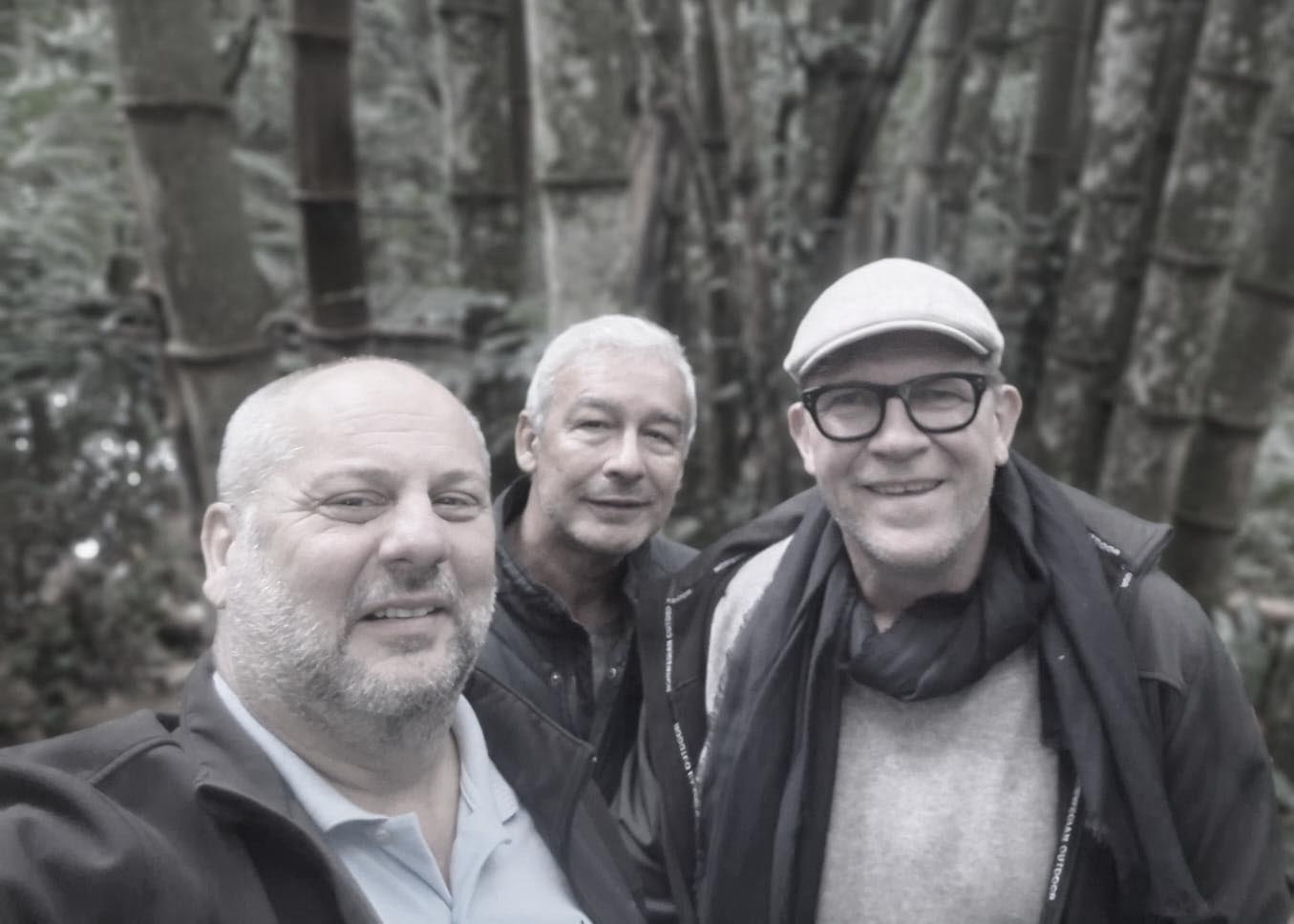
TURBOO® is driven by an international team of experts in architecture, timber construction, materials research, and industrial development. Together, they pursue the goal of establishing a new building material standard for a sustainable and high-performance construction industry.
The development of TURBOO® is based on many years of experience in the fields of timber construction, materials development, industrial production, and construction practice. The project is supported by research partners, industrial companies, and funding programs.
Vision
The construction industry worldwide is facing profound changes. Climate protection, urbanization, and resource scarcity require new materials and new approaches for the construction of the future.
TURBOO® pursues the vision of establishing a new structural building material for the construction industry that combines high performance with a sustainable raw material base. The goal is to develop a new generation of bio-based building materials that can be used worldwide.
Through the combination of material innovation, industrial production, and global scaling, TURBOO® aims to become a key component of a climate-friendly construction industry in the long term.
The Founder
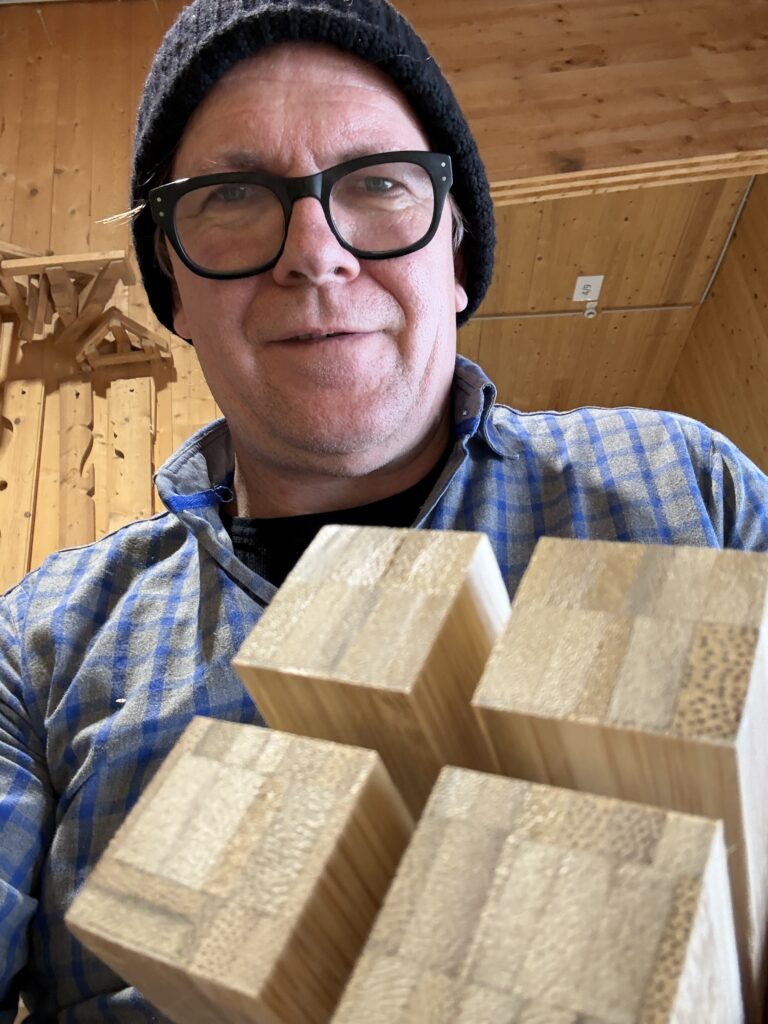
Harry Knoll is an architect, carpenter, and developer of the TURBOO® technology. For over three decades, he has been engaged in structural timber construction, material-efficient load-bearing structures, and the development of innovative materials for the construction industry.
His professional career combines training in the trades, architectural design, and materials technology development. Building on this foundation, he has intensively studied the structural performance of renewable raw materials, particularly the potential of bamboo as a structural building material.
Over many years, he developed concepts and processes to transform the natural fiber structure of giant bamboo into an industrially usable high-performance material. This led to the creation of TURBOO® technology, which enables bamboo to be processed into load-bearing components for structural applications in architecture, infrastructure, and industrial construction.
As founder and owner, Harry Knoll is responsible for the strategic development of the technology as well as the refinement of the production and scaling strategy. The focus of his work is establishing TURBOO® as a new material category for a sustainable and industrially scalable construction industry.
Partners
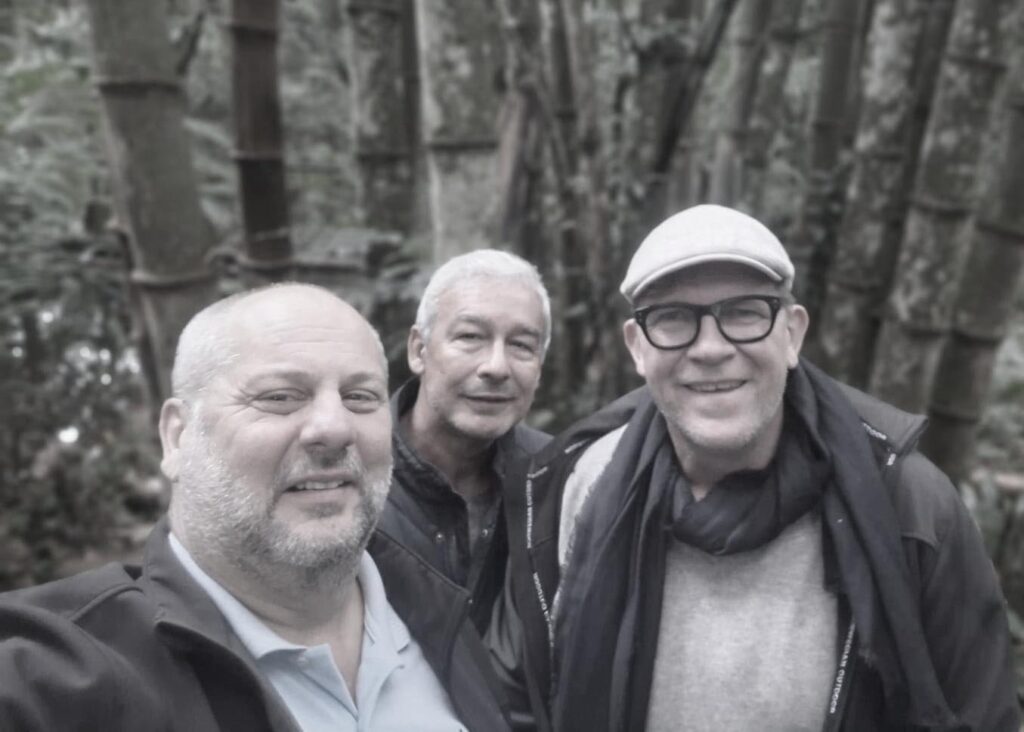
The development of TURBOO® is driven by an interdisciplinary team. Experts from architecture, timber construction, materials science, and industrial production are working together to further develop the technology and translate it into construction practice.
Key competencies in the project include, among others:
– Architecture and construction practice
– Timber construction and industrial manufacturing
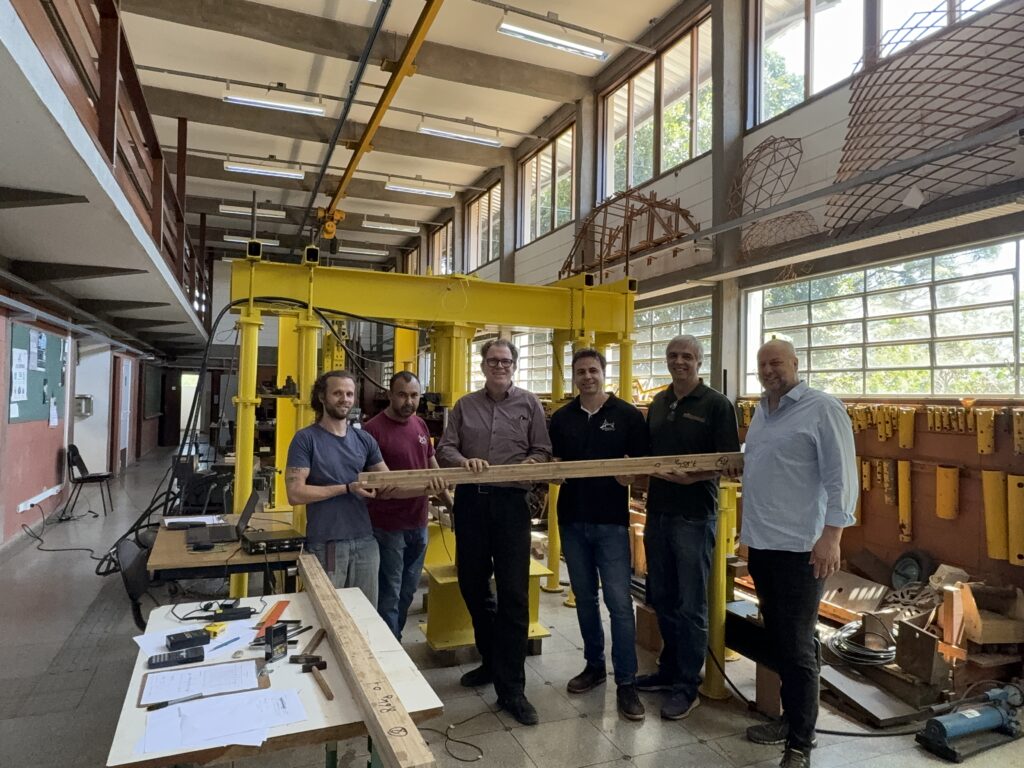
– Materials development and testing
– Mechanical engineering and production development
This network combines scientific expertise with practical experience from the construction and industrial sectors.
Would you like to learn more about TURBOO®, initiate a collaboration, or discuss a specific project? Get in touch with us.
International Development
TURBOO® has been designed as an international material innovation from the very beginning.
The development integrates raw material production, material technology, and industrial applications across various regions of the world.
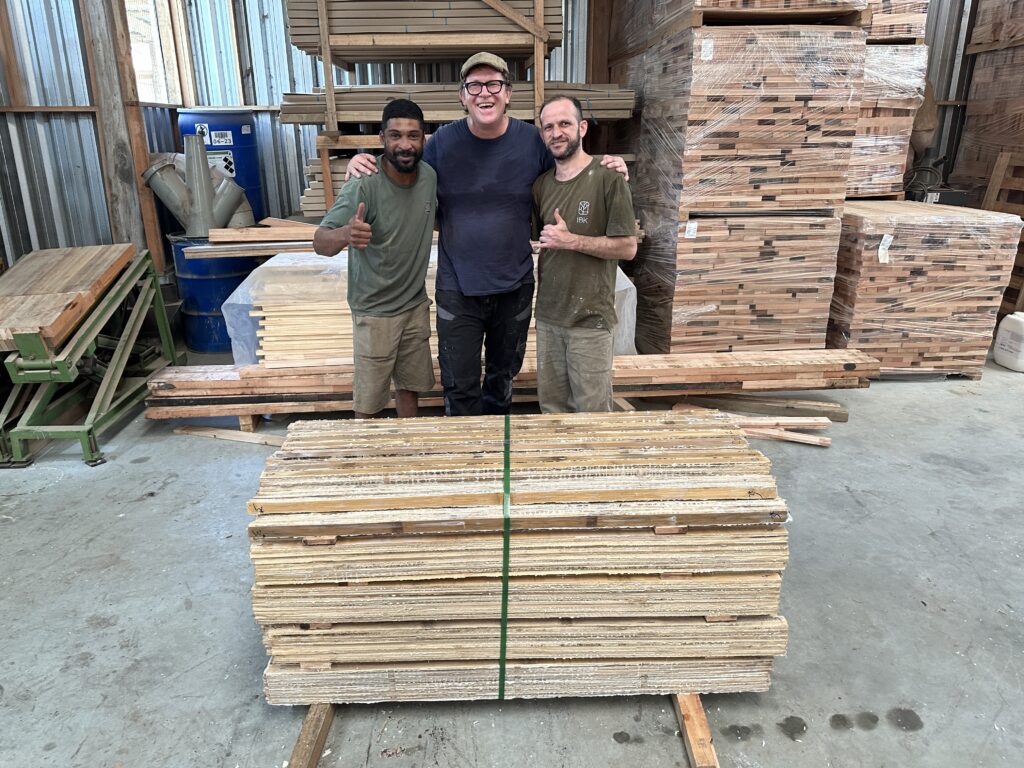
A key focus is on the sustainable use of giant bamboo as a raw material base, as well as on the development of industrial production processes. Pilot projects and production sites form the foundation for future global scaling of the technology.
This creates a new industrial ecosystem centered around the TURBOO® building material.
SPRIND
The Federal Agency for Breakthrough Innovations (SPRIND) is a government innovation agency founded in 2019. Its goal is to promote breakthrough innovations—that is, radical technological innovations that have the potential to fundamentally transform markets.
SPRIND provides financial and organizational support for promising ideas from academia and industry, particularly in the early stages of development. A key tool is competitions (“challenges”), in which solutions to major future problems are developed.
University of Innsbruck
The University of Innsbruck is one of Austria’s largest and most important research institutions and was founded in 1669. It offers a wide range of degree programs in the natural sciences, humanities, business, and engineering.
The university is particularly renowned for its research in the Alpine regions and in quantum physics. As an internationally networked institution, it attracts students and researchers from all over the world and makes a significant contribution to scientific development in Europe.
University of São Paulo
The University of São Paulo (USP) is the largest and one of the most prestigious universities in Latin America. It was founded in 1934 and is headquartered in São Paulo.
USP offers a very wide range of academic programs and is particularly strong in research and innovation. It is considered a leader in many fields, such as medicine, engineering, and the social sciences, and plays a central role in Brazil’s scientific development.
Supporters
The development of TURBOO® is driven by an interdisciplinary team. Experts in architecture, timber construction, materials science, and industrial production are working together to further develop the technology and implement it in construction practice.
Key competencies in the project include, among others:
– Architecture and construction practice
– Timber construction and industrial manufacturing
– Materials development and testing
– Mechanical engineering and production development
This network combines scientific expertise with practical experience from the construction and industrial sectors.

X-fix
X-fix wood connector GmbH is an Austrian company that develops innovative connection systems for timber construction. The core product is a patented wood connector that joins wooden components directly to one another—without any metal.
The so-called X-fix system is based on a special geometric principle in which two conically shaped wooden parts are driven into one another and self-lock. This creates stable, load-bearing connections that require no additional tools or screws.
A particular advantage lies in sustainability: The connections are made entirely of wood, are easy to assemble and disassemble, and support circular construction. At the same time, the system enables fast and cost-efficient construction, particularly in modern timber construction projects such as cross-laminated timber structures.

Unterrainer
Unterrainer Holzbau GmbH is an Austrian company specializing in modern timber construction. It plans and executes construction projects such as residential homes, commercial buildings, and agricultural structures with a focus on sustainable materials and energy-efficient construction methods.
A particular focus is placed on innovative timber construction solutions and precise prefabrication, which shortens construction times and ensures high quality standards. In this way, the company contributes to the advancement of eco-friendly construction.

SENAI
The Serviço Nacional de Aprendizagem Industrial (SENAI) is one of the most important vocational training institutions in Brazil. It was founded in 1942 and is part of the so-called “Sistema Indústria,” which is closely linked to industry.
SENAI offers a wide range of training and continuing education programs—from basic vocational training and technical degrees to higher education and specialization programs. The goal is to train skilled workers for various industrial sectors while promoting innovation and technological development.
With numerous locations throughout the country and millions of participants, SENAI is considered one of the largest vocational training systems in the world and plays a central role in the competitiveness of Brazilian industry.
Our Partner Network
The development of TURBOO® is supported by an international network of research, industry, and the construction sector. Together, we are working to establish a new building material standard for a sustainable construction industry.
Validatoren und Partner